

Body Corporate Fees in Queensland: A Complete Guide for Apartment Owners
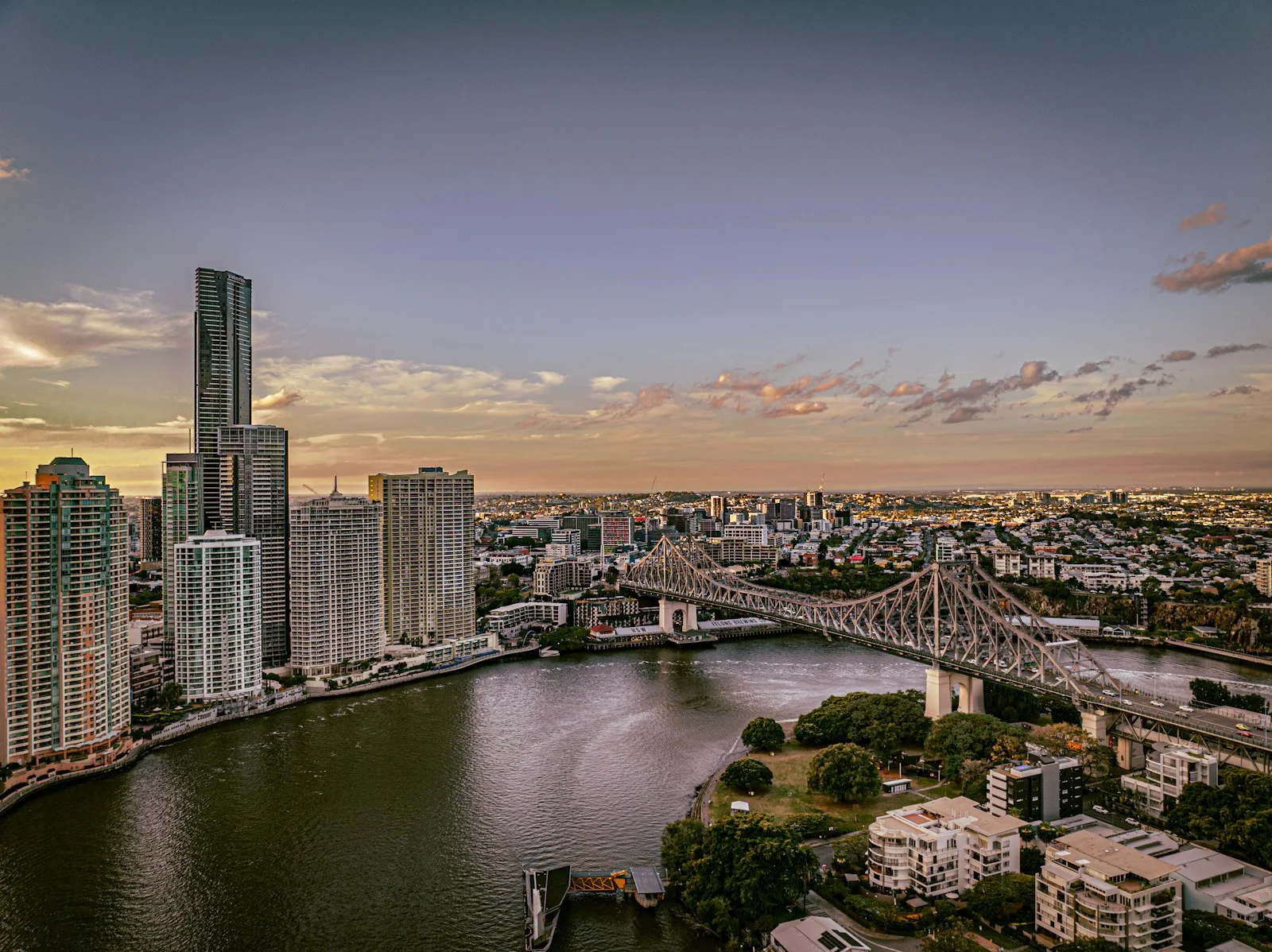
Photo: Josh Withers
Your first levy notice arrives for your new Brisbane apartment. It's $1,900 a quarter. Your colleague in the same suburb is paying $800. Your mate on the Gold Coast is paying $3,200. Same general area. Same rough apartment size. Wildly different numbers.
This is the body corporate fees experience in Queensland - confusing, variable, and often unexplained. Understanding why it varies, what you're actually paying for, and whether your fees are reasonable starts with understanding how the Queensland system works.
Good news: Queensland's body corporate framework is one of the more transparent in Australia. The laws are clear, the dispute process is accessible, and - unlike some states - you even have the right to challenge a levy if you think it's wrong.
Related Guides
Queensland's Terminology: Why "Body Corporate" Is Your Term
If you've read anything about strata living nationally, you've probably noticed the terminology mess. Victoria calls it an "owners corporation." NSW uses "owners corporation" or "strata scheme." Western Australia has "strata company."
Queensland uses body corporate - and unlike other states where this is just a legacy term, it's the legally correct name under Queensland law. It's enshrined in the Body Corporate and Community Management Act 1997 (BCCM Act), which is the legislation that governs your scheme.
The term isn't going anywhere. When you see "owners corporation" or "strata fees" in national articles, substitute "body corporate" and "body corporate fees" - same thing.
The Law That Governs You: The BCCM Act
Queensland body corporate schemes are regulated by the Body Corporate and Community Management Act 1997 and a set of regulation modules that apply depending on your scheme type:
- Standard Module - the most common, applies to most residential schemes
- Accommodation Module - mixed-use or predominantly short-term accommodation buildings
- Commercial Module - commercial developments
- Small Schemes Module - schemes with fewer than 6 lots, simplified rules
- Specified Two-lot Module - for two-lot schemes
Which module applies to your scheme matters. The Standard Module has stricter financial planning requirements and more formal processes for raising and spending levies. The Small Schemes Module is lighter-touch. If you don't know which module applies to your building, ask your body corporate manager - it should be stated in your by-laws.
The Office of the Commissioner for Body Corporate and Community Management (BCCM Commissioner) oversees Queensland body corporate disputes. This office is free, fast, and surprisingly good - more on that later.
How Levies Work in Queensland
Like all Australian states, Queensland body corporates are funded by two main levies:
Administrative Fund Levy
The administrative fund covers day-to-day running costs:
- Body corporate manager fees (if you have a manager)
- Building and public liability insurance
- Maintenance of common property (gardens, pools, lifts, hallways)
- Utilities for common areas
- Cleaning and caretaking
- Management of by-law compliance
- AGM costs and administration
This is your "operating budget" levy - it resets each financial year based on the approved budget.
Sinking Fund Levy
The sinking fund (sometimes called the capital works fund in other states) covers long-term repairs and replacements - things like:
- Roof replacement
- Exterior repainting
- Lift upgrades
- Pool resurfacing
- Car park repairs
- Major structural work
Under the BCCM Act, body corporates are required to have a sinking fund forecast - a rolling 10-year plan projecting expected capital expenditure. This is reviewed and approved at the AGM. A well-run body corporate builds the sinking fund steadily rather than raiding it at crisis point and hitting owners with special levies.
Red flag: If your sinking fund balance is very low relative to the age of the building, start asking questions. It's a sign of poor financial management and a special levy is likely coming.
Related: How Much Should a Body Corporate Have in Its Capital Works Fund?
How Your Levy Is Calculated
In Queensland, your levy contribution is based on your lot entitlement - a number assigned to your lot in the community management statement (CMS). Two types of entitlements matter:
- Interest entitlement - determines your share of body corporate assets and liabilities (including levies)
- Contribution entitlement - often the same as interest entitlement, but can differ; used specifically for levy calculations in some modules
Under the Standard Module, levies are calculated based on contribution schedule lot entitlements. Your lot's entitlement as a proportion of the total scheme entitlements determines your share of the total budget.
For example, if the total annual budget is $200,000 and your lot has 100 entitlements out of a total 10,000, you pay 1% of the budget - $2,000 per year, or $500 per quarter. Our free body corporate fees calculator works this out for you once you know the budget and your contribution schedule entitlement.
These entitlements are set by the developer when the scheme is established and are difficult to change (it requires unanimous resolution). If your entitlements feel unfair compared to similar lots, it's worth understanding how they were set.
What's Typical in Queensland?
Queensland fee levels vary enormously by building type, location, and age. Based on data from our fee comparison platform:
Small residential complexes (6–20 lots, no resort facilities) Typically $600–$1,400 per quarter for a standard 2-bedroom apartment. Buildings with pools push toward the higher end. No pool, well-managed, modest amenities can come in well under $800/quarter.
Mid-size buildings (20–60 lots, pool, some common facilities) $900–$2,000 per quarter is common. Buildings with on-site caretakers add meaningfully to costs - the caretaker arrangement is a big variable in Queensland that doesn't exist in the same form in other states.
High-rise or resort-style buildings (60+ lots, full facilities) $1,800–$4,500+ per quarter. Inner-Brisbane and Gold Coast prestige buildings can exceed this significantly. Buildings with concierge, gymnasium, multiple pools, and function rooms have proportionally higher admin costs.
Townhouse complexes Generally lower - $400–$900 per quarter - because common facilities are minimal. You're mostly paying for insurance, gardens, and any shared infrastructure.
The most useful comparison is against similar buildings in the same suburb - benchmark your levies against actual data from your area.
See how your fees stack up
Use our free body corporate fees calculator to estimate your levy from your unit entitlement - then benchmark it against real data from your suburb.
Open the body corporate fees calculatorThe Caretaker Factor: A Queensland Quirk
Queensland has something other states largely don't: a formal caretaking arrangement. Many Queensland body corporate schemes - particularly in resort areas and larger buildings - have a resident caretaker appointed under a caretaking and letting agreement.
The caretaker lives on-site (or manages from the building) and handles day-to-day maintenance, oversight, and sometimes short-term letting services for investor owners.
These arrangements are typically long-term contracts - 10, 20, even 25 years - and caretaker fees can represent 15–30% of the admin fund budget in some buildings. This is legal and common, but it's a significant cost driver.
Before buying in a building with a caretaker arrangement, check:
- How long is the caretaking contract?
- What does it cost annually?
- What services are included?
- Can the contract be terminated if service is poor?
Caretaking arrangements are heavily regulated under the BCCM Act, but they're also a source of significant body corporate disputes in Queensland.
Related: How to Choose a Body Corporate Manager - also covers how to evaluate on-site management arrangements.
Also: Can a Body Corporate Ban Airbnb? State-by-State Rules - Queensland's position on short-term letting restrictions.
Know what your body corporate fees are?
Add them anonymously in 2 minutes - no documents stored. Every contribution helps build the benchmark for Australian apartment owners.
Contribute Your FeesInsurance: Usually Your Biggest Levy Component
Building insurance is mandatory in Queensland and typically the single largest expense in the administrative fund. The body corporate must insure the building for its full replacement value - not market value, which is a common misconception.
In recent years, Queensland insurance costs have been brutal. Far North Queensland buildings in cyclone zones have seen premium increases of 50–100%+ since 2019. Brisbane and South East Queensland have been hit by flood and storm event repricing. The short version: if your fees jumped in the last three years, insurance is almost certainly a big part of why. Our fee increase calculator lets you project where your levies are heading if that trend continues.
The full picture: Body Corporate Insurance Crisis: Why Premiums Doubled Since 2019
Your Rights When It Comes to Levies
Queensland owners have solid rights when it comes to levy disputes:
Disputing a Special Levy
If you believe a special levy was raised improperly - for example, without proper authorisation, or for an expense that should have been funded through the sinking fund - you can apply to the BCCM Commissioner for adjudication.
Challenging the Budget
If you believe the approved budget is unreasonable, you can raise the issue at the AGM. Budgets are approved by ordinary resolution (simple majority), so if enough owners share your view, the budget can be amended or deferred.
Applying for Adjudication
The Office of the Commissioner for Body Corporate and Community Management provides free conciliation and adjudication services for Queensland body corporate disputes. This is a genuine advantage over some other states where owners must go straight to a tribunal.
The process:
- Conciliation first - a conciliator helps the parties reach agreement. Free, informal, fast.
- Adjudication - if conciliation fails, an adjudicator makes a binding decision.
Adjudicator decisions are legally binding on the body corporate. Common issues resolved through this process: failure to maintain common property, levy disputes, by-law enforcement, and committee decisions made improperly.
Queensland-Specific Rules Worth Knowing
AGMs and Voting
Queensland body corporates must hold an AGM each year. Owners vote by attendance, proxy, or - increasingly - by ballot paper. The AGM is where:
- The annual budget is approved (setting your levies for the year)
- Committee members are elected
- Spending outside the approved budget is authorised
If you can't attend, you can vote by proxy or written vote on certain resolutions. This matters - AGMs where few owners participate tend to have higher costs.
Committee Decisions
The committee (elected at the AGM) can make most day-to-day decisions without a full owner vote. However, there are limits: spending above a set threshold, changes to by-laws, and major contracts all require a general meeting resolution.
Exclusive Use Areas
If you have a courtyard, parking space, or storage cage that's technically common property but you use exclusively, it may be covered by an exclusive use by-law. This affects who's responsible for maintenance - something that comes up frequently in disputes.
For a full overview of how by-laws work and what they can restrict: Body Corporate By-Laws: Complete Guide
The Dispute Resolution Advantage
Queensland's BCCM Commissioner system is legitimately better than going to QCAT (Queensland Civil and Administrative Tribunal) for most disputes. The Commissioner's office is free, faster, and handles the vast majority of body corporate matters. QCAT is reserved for more complex legal issues or appeals from adjudicator decisions.
Before You Buy: What to Check
Before purchasing a Queensland property in a body corporate scheme, get a body corporate information certificate (sometimes called a Form 14). This document discloses:
- Current levy amounts
- Any outstanding levies on the lot
- Pending special levies (if approved or notified)
- Any litigation the body corporate is involved in
- The state of the sinking fund
A high-functioning body corporate will have clean financials, a funded sinking fund, and no material litigation. An underfunded sinking fund, pending special levies, or ongoing disputes are red flags worth taking seriously.
Full checklist: Essential Questions to Ask Before Purchasing and How to Read a Strata Search Certificate: The Buyer's Checklist
Are Your Queensland Fees Too High?
The fastest way to find out is to compare them against real data from similar buildings in your suburb. No two buildings are identical - different facilities, different ages, different caretaker arrangements - but a significant deviation from the local average warrants investigation.
Questions to ask:
- What does your building's insurance actually cost, and when was it last market-tested with competing quotes?
- Is there a caretaking contract, and is the fee reasonable for services delivered?
- Is the sinking fund appropriately funded per the 10-year forecast?
- Are there any pending special levies or known major expenses?
- Has the body corporate obtained competing quotes for major maintenance contracts recently?
Compare your fees against Queensland buildings in our database →
The Bottom Line
Queensland has a solid, well-established body corporate framework. The BCCM Act is detailed, the Commissioner's dispute resolution service is accessible, and the rules around financial management are clear.
What that doesn't do is guarantee your fees are reasonable. A well-run building with competitive contracts and good financial planning can look completely different from a poorly managed building next door. The numbers in your levy notice should make sense - if they don't, you have real tools to find out why.
Start by benchmarking. Then read the AGM minutes. Then ask questions at the next general meeting. Queensland owners who engage with their body corporate almost always end up with better outcomes than those who pay and wonder.
Ready to Contribute Your Fees?
Add your fees to help build the database. Get access to suburb overviews when they're ready.
Contribute Your Fees