

What Are Body Corporate Fees? Average Costs & What They Cover (2026)

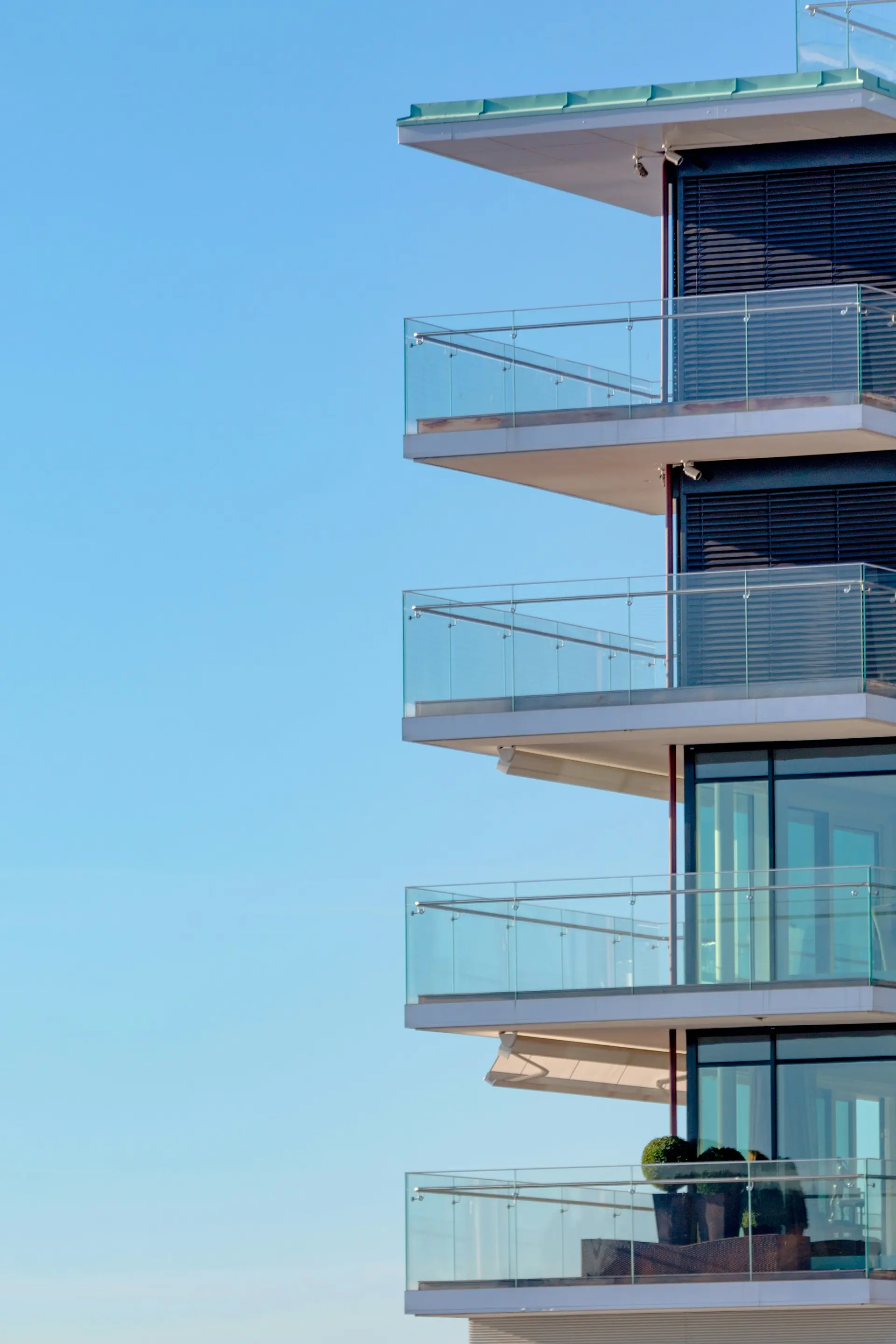
Photo: Sean Pollock
If you own or are considering buying an apartment, townhouse, or unit in Australia, you'll inevitably encounter body corporate fees. They've also got other names depending on where you live, strata fees, owners corporation fees, strata levies. For many property owners, these fees can feel like a mystery. It's an ongoing expense that varies wildly between buildings without clear explanation.
This guide will demystify body corporate fees, explaining exactly what they are, what they cover, how they're calculated, and why they differ so much between properties.
What Is a Body Corporate?
Before diving into fees, it's important to understand what a body corporate actually is.
A body corporate (also called strata corporation, owners corporation, or community association) is the legal entity that owns and manages the common property in a multi-unit development. When you buy an apartment or unit, you own your individual lot, but you share ownership of common areas (lobbies, hallways, gardens, pools, gyms, and the building structure itself) with other owners.
The body corporate's responsible for maintaining and repairing common property, insuring the building, managing shared facilities and amenities, enforcing building by-laws and rules, collecting and managing levies from owners, and planning for long-term maintenance and capital works.
In essence, it's the administrative and financial framework that allows multiple owners to collectively manage shared property.
State-by-State Terminology
Australia's states use different terms for the same concept. In New South Wales, it's Owners Corporation (previously Strata Corporation). Victoria calls it Owners Corporation. Queensland uses Body Corporate. Western Australia has Strata Company. South Australia uses Strata Corporation or Community Corporation. Tasmania, ACT, and NT all use variations on these themes.
For simplicity, this article uses "body corporate," but the principles apply regardless of your state's terminology.
What Are Body Corporate Fees?
Body corporate fees (or levies) are regular payments made by all owners in a strata scheme to fund the body corporate's operations and responsibilities. Think of them as the shared running costs for your building.
These fees are typically charged quarterly (every three months), though some buildings charge monthly or annually. The amount you pay is generally based on your unit entitlement, a proportionate share of the total fees based on factors like your lot's size, value, or assigned interest in the common property.
Why Do Body Corporate Fees Exist?
Body corporate fees exist because shared property requires shared financial responsibility. When multiple people own parts of the same building, they need a pooled fund to pay for ongoing expenses like cleaning, gardening, electricity for common areas, and management fees. They need to build reserves for future major expenses like roof repairs, repainting, or lift replacements. They've got to provide insurance for the building structure and common property, maintain amenities such as pools, gyms, and security systems, and cover unexpected costs like emergency repairs or legal fees.
Without body corporate fees, individual owners would need to negotiate and coordinate every shared expense, an impractical arrangement that would lead to neglected maintenance and disputes.
What Do Body Corporate Fees Cover?
Body corporate fees are divided into different funds or accounts, each serving a specific purpose. Understanding these components helps you see where your money goes and assess whether your fees represent good value.
1. Administrative Fund (Admin Fund)
The administrative fund covers the day-to-day running costs of the body corporate. This includes the body corporate manager's fees (if one's appointed), common area electricity and utilities, cleaning of common areas like lobbies, hallways, and stairwells, gardening and landscaping maintenance, security services or monitoring, waste management and rubbish removal, building management salaries for on-site managers or caretakers, general repairs and maintenance, bank fees and accounting costs, legal fees for routine matters, stationery and postage, and AGM (Annual General Meeting) costs.
The admin fund is essentially the building's operating budget, the money needed to keep things running day-to-day.
2. Sinking Fund (Capital Works Fund or Reserve Fund)
The sinking fund is a savings account for major repairs, replacements, and capital improvements. This is money set aside for future expenses that occur infrequently but cost significantly.
What the sinking fund covers: roof repairs or replacement, painting the exterior of the building, lift (elevator) maintenance and replacement, driveway and carpark resurfacing, plumbing or electrical system upgrades, fire safety system updates, structural repairs, pool resurfacing or equipment replacement, façade repairs or building envelope work, and replacement of major equipment like boilers and pumps.
The sinking fund is crucial for the long-term health of your investment. A well-funded sinking fund means unexpected major expenses can be covered without special levies (those emergency payments demanded from owners).
A healthy sinking fund should have at least 12-24 months of average spending in reserves, a long-term capital works plan outlining expected major expenses, and regular contributions that keep pace with the building's aging.
An inadequate sinking fund is a major red flag when buying a property, it often means special levies are on the horizon.
3. Insurance
Most body corporate fees include building insurance as a separate line item, though some buildings roll it into the admin fund.
What body corporate insurance covers: the building structure and common property, public liability (if someone is injured in common areas), office bearer's liability (protects committee members from personal liability), and fidelity insurance (protects against theft or fraud by managers or committee).
What it doesn't cover: contents of your individual unit (you need separate contents insurance) or improvements you've made to your unit (you may need landlord insurance or additional cover).
Insurance has been a major driver of body corporate fee increases in recent years, with premiums rising significantly across Australia due to climate risks, building defects concerns, and general market conditions.
For more detail, check out Body Corporate Insurance Explained - it covers what's included, what you need to insure yourself, and common coverage gaps.
4. Special Levies
While not a regular fee, special levies are additional payments demanded when the body corporate needs funds beyond what's available in the admin or sinking funds.
Common reasons for special levies: emergency repairs from storm damage, flood, or fire, major unexpected expenses like building defects or litigation, upgrades not covered by the sinking fund, or a sinking fund deficit when reserves are inadequate.
Special levies can range from a few hundred dollars to tens of thousands per owner, depending on the issue. They're often a sign of poor financial planning or unforeseen circumstances.
Buildings that regularly impose special levies may have inadequate sinking fund contributions or poor financial management.
5. Utilities and Services
Some body corporate fees include specific utilities for common areas: water for gardens, pools, and cleaning, electricity for common area lighting, lifts, and equipment, gas if used for common property, internet or communications infrastructure, and waste management and recycling.
These may be itemised separately or included in the admin fund.
6. Amenities
If your building has amenities, their maintenance and operation are funded by body corporate fees: swimming pool maintenance (chemicals, cleaning, equipment), gym equipment maintenance and cleaning, sauna or spa maintenance, tennis court or recreation area upkeep, concierge or reception services, visitor carpark management, and common area furniture and equipment.
Buildings with extensive amenities naturally have higher fees, as pools, gyms, and concierge services all require ongoing costs.
How Are Body Corporate Fees Calculated?
Body corporate fees aren't arbitrary, they're calculated based on several key factors.
1. Unit Entitlement
Your unit entitlement determines your share of body corporate costs. It's expressed as a fraction or percentage of the total scheme.
Unit entitlements are typically based on lot size (larger apartments pay more), lot value (higher-value units pay proportionally more), or original developer allocation (sometimes set arbitrarily at development stage).
For example, if your unit entitlement is 50 out of a total scheme entitlement of 5,000, you own 1% of the common property and pay 1% of the total body corporate expenses.
If total quarterly fees are $250,000, you'd pay: $250,000 × (50 ÷ 5,000) = $2,500 per quarter. You can run these numbers for your own scheme with our free body corporate fees calculator.
2. Building Operating Costs
The body corporate calculates estimated annual expenses for admin fund requirements, sinking fund contributions (based on capital works plan), insurance premiums, and utilities and services. These costs are then divided by unit entitlement to determine each owner's levy.
3. Capital Works Planning
A professional capital works plan (also called a maintenance plan or sinking fund forecast) assesses the building's condition and estimates future major expenses over 10-25 years.
This plan influences sinking fund contribution levels. Buildings with aging infrastructure or upcoming major works will have higher sinking fund levies.
4. Building Age and Condition
Older buildings typically have higher fees because more frequent repairs are needed, major systems are nearing replacement, and sinking fund contributions must be higher to prepare for big-ticket items.
Newer buildings may have lower fees initially, but this can be misleading, as buildings age, fees inevitably rise.
5. Amenities and Services
Buildings with pools, gyms, concierge, lifts, and extensive common areas have higher operating costs, resulting in higher fees.
6. Management Structure
Body corporate fees are also affected by how the building is managed. Most use a professional strata manager, which costs typically $500-$5,000 per year for the scheme (divided among owners). Some buildings are self-managed, which has lower admin costs but requires dedicated owner involvement. Buildings with on-site building managers or caretakers have significant ongoing salary costs.
Why Do Body Corporate Fees Vary So Much?
If you've researched multiple properties, you've likely noticed body corporate fees can range from $1,000 per quarter to $5,000+ for seemingly similar properties. Here's why.
Location matters. Inner-city apartments typically have higher fees than suburban ones due to higher service costs in urban areas, more expensive insurance, additional amenities common in city buildings, and higher property values (which drive unit entitlements).
Building size affects costs. Smaller buildings often have higher per-unit fees because fixed costs like insurance, manager fees, and common area maintenance are divided among fewer owners. Larger buildings benefit from economies of scale, though this advantage can be offset by more complex systems and larger common areas.
Building age plays a role. Older buildings have higher fees due to increased maintenance needs and higher sinking fund requirements for upcoming major works. Brand new buildings may have low initial fees (sometimes deliberately set low by developers to attract buyers), but these typically rise significantly within 5-10 years as deferred maintenance becomes due and sinking funds need to catch up.
Amenities drive variation. Buildings with no amenities might run $800-$1,500 per quarter, while basic amenities like a pool and gym push that to $1,500-$2,500 per quarter, and premium amenities with pool, gym, sauna, concierge, and tennis court can hit $2,500-$5,000+ per quarter.
Financial health matters. Buildings with well-managed finances and adequate sinking funds have stable, predictable fees. Buildings with poor planning may have artificially low fees now but will inevitably face large fee increases or special levies when major works become urgent.
Building defects are a factor. Buildings with known or emerging defects (common in Australian high-rises built during the 2000s-2010s construction boom) may have higher insurance costs, legal fees for defect claims, special levies for emergency repairs, and higher ongoing maintenance costs.
Management quality can't be overlooked. A competent body corporate manager or committee can negotiate better contracts for services, plan effectively for long-term costs, avoid wasteful spending, and catch problems early before they become expensive. Poor management leads to higher costs, emergency expenses, and financial instability.
State-by-State Differences
While the principles are the same, body corporate fees have some state-specific variations.
New South Wales is governed by the Strata Schemes Management Act 2015, requires 10-year capital works fund plans, allows owners to request detailed financial records, and sees average quarterly fees of $1,200-$2,500. Read our complete NSW strata fees guide for how levies are calculated and what the 2025-26 reforms change.
Victoria operates under the Owners Corporations Act 2006, requires maintenance plans and fund forecasts, needs owners to approve budgets annually, and has average quarterly fees of $1,100-$2,400. See our complete Victoria owners corporation fees guide.
Queensland uses the Body Corporate and Community Management Act 1997, has multiple regulation modules (Standard, Accommodation, Commercial, etc.), requires sinking fund contributions to follow maintenance schedules, and sees average quarterly fees of $1,000-$2,200. See our complete Queensland body corporate fees guide.
Western Australia follows the Strata Titles Act 1985, requires 10-year maintenance plans for larger schemes, makes reserve fund contributions mandatory, and has average quarterly fees of $900-$2,000. See our complete WA strata fees guide.
What's a Reasonable Body Corporate Fee?
There's no universal "reasonable" fee, it depends entirely on your specific building. However, here are general guidelines.
For a studio or 1-bedroom apartment, a basic building with no lift or amenities might run $800-$1,500 per quarter, a standard building with a lift and basic amenities might be $1,200-$2,000 per quarter, and a premium building with lift, pool, gym, and concierge could be $1,800-$3,500 per quarter.
For a 2-bedroom apartment, expect $1,000-$1,800 per quarter in a basic building, $1,500-$2,500 in a standard building, and $2,200-$4,500 in a premium building.
For a 3-bedroom apartment or townhouse, you're looking at $1,200-$2,200 per quarter for basic, $1,800-$3,000 for standard, and $2,500-$5,500+ for premium.
Red flags include fees below typical range (suggests underfunding), fees significantly above range without clear justification, rapidly increasing fees (20%+ per year), frequent special levies, and large discrepancy between admin fund and sinking fund (sinking fund should typically be 30-60% of total fees).
See how your fees stack up
Use our free body corporate fees calculator to estimate your levy from your unit entitlement - then benchmark it against real data from your suburb.
Open the body corporate fees calculatorHow to Assess if Your Fees Are Fair
When evaluating body corporate fees for a property you own or are considering, ask yourself a few key questions.
For a comprehensive guide on evaluating your fees, see our article: Are My Body Corporate Fees Too High?
What do the fees include? Get a detailed breakdown showing admin fund contribution, sinking fund contribution, insurance, manager fees, and specific services and amenities.
What's the sinking fund balance? Request the current balance and recent capital works fund statement. A healthy building should have sinking fund reserves equivalent to at least 12-24 months of average spending.
Is there a current capital works plan? Review the plan to see what major expenses are coming in the next 5-10 years. Are sinking fund contributions adequate to cover these costs?
What's the fee history? Ask for levies over the past 5 years. Gradual increases (3-5% annually) are normal. Sudden jumps or special levies warrant investigation.
Have there been recent special levies? If yes, why? Emergency situations are understandable, but frequent special levies suggest poor planning.
How do fees compare to similar buildings? Research comparable properties in the same suburb to see if your fees are in line with market averages.
What's included in amenities? If you're paying for a pool and gym, do you use them? Amenities that sit unused are still costly to maintain.
What's the building's age and condition? Factor in upcoming major works. A 20-year-old building with low fees might seem great, but major systems may be nearing replacement.
What Happens if You Don't Pay Body Corporate Fees?
Failing to pay levies has serious consequences: late fees and interest accumulating additional charges, loss of voting rights so you can't vote at meetings, legal action since the body corporate can take you to court, debt recovery with fees added as a charge against your property title, and in extreme cases, forced sale where the body corporate can force the sale of your property.
Additionally, unpaid levies transfer to the new owner when you sell, making your property difficult to sell until cleared.
Can Body Corporate Fees Be Reduced?
While owners can't simply refuse to pay, you can influence fees through active participation. Attend AGMs and join the body corporate committee. Committee members influence spending decisions and can push for cost savings.
Question expenses by reviewing annual budgets and financial statements. Question unnecessary spending or expensive contracts.
Seek competitive quotes. Encourage the committee to tender for services like cleaning, gardening, and management to ensure competitive pricing.
Prioritise maintenance. Proactive maintenance is cheaper than emergency repairs. Push for preventive strategies.
Review insurance. Work with your strata manager to shop around for insurance annually rather than automatically renewing.
Challenge unnecessary amenities. If amenities are rarely used and costly, you can propose closing or mothballing them (requires majority owner support).
However, be cautious about pushing fees too low, under-collecting levies leads to deferred maintenance, building deterioration, and eventual large special levies.
Frequently Asked Questions
Are body corporate fees tax-deductible?
For investors, yes, body corporate fees are generally tax-deductible as a property expense. For owner-occupiers, no, you can't claim body corporate fees as personal deductions. Always consult your accountant for specific tax advice.
Do body corporate fees include rates and taxes?
No. Body corporate fees are separate from council rates, water rates for your unit, land tax if applicable, and your personal property insurance. You're responsible for these in addition to body corporate fees.
Can body corporate fees increase without notice?
Generally, no. Budgets must be approved at the Annual General Meeting, and owners have the opportunity to vote on proposed levies. However, the committee can impose special levies for urgent matters.
What if I disagree with a special levy?
You can vote against it at the general meeting, request detailed justification and quotes, propose alternative funding solutions, and in some cases, seek dispute resolution through state tribunals. However, if the majority approves the levy, you must pay.
Are body corporate fees higher in high-rise buildings?
Generally, yes, due to lifts (maintenance and replacement are expensive), more complex building systems, higher insurance costs, larger common areas, and often more amenities.
How often do body corporate fees increase?
Most buildings increase fees annually, typically 3-7% to account for inflation and rising costs. Larger increases or special levies suggest financial challenges or major upcoming works.
The Bottom Line
Body corporate fees are an essential and unavoidable part of apartment ownership in Australia. They fund the maintenance, insurance, and management of shared property, protecting your investment in the long term.
While fees may seem like a burden, they're actually protecting you from much larger potential costs, imagine being personally responsible for replacing a building's roof or lifts!
The key is ensuring you're paying fair fees for good value. Understand what your fees cover, review financial statements regularly, ensure sinking fund contributions are adequate, compare fees to similar buildings, and participate in body corporate governance.
A well-managed body corporate with appropriate fee levels will maintain your property value, avoid unpleasant special levy surprises, and create a pleasant living environment.
Want to see how your fees compare? Add your fees to our comparison tool and see where you stand compared to similar properties in your suburb.
Want to learn more about managing your body corporate costs? Check our resources page for guides, calculators, and tools, or explore our comprehensive FAQ for answers to common questions.
This article is for informational purposes only and should not be considered financial or legal advice. Always consult qualified professionals for advice specific to your circumstances.
Ready to Contribute Your Fees?
Add your fees to help build the database. Get access to suburb overviews when they're ready.
Contribute Your Fees