
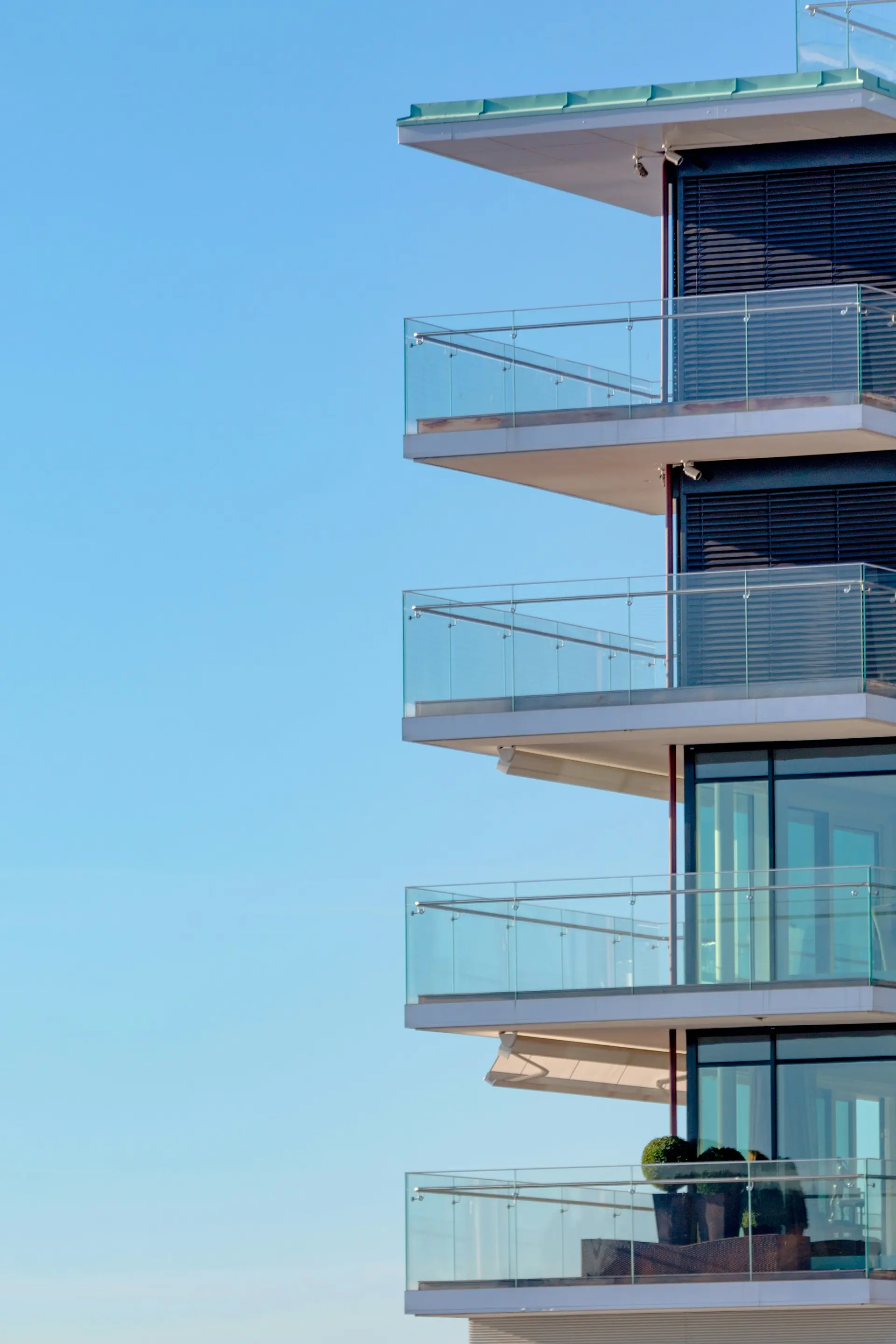

Strata Fees in South Australia: A Complete Guide for Apartment Owners

Photo: Jonathan Xu
South Australia's apartment market is concentrated largely in Adelaide's inner suburbs - the CBD fringe, North Adelaide, Norwood, Unley, and increasingly the redevelopment corridors along the old tram routes. Strata living has been part of SA's housing mix for decades, but the regulatory framework is less well-known than Queensland's BCCM system or NSW's post-2016 reforms.
SA is also one of the few states with two parallel legislative frameworks governing multi-title properties - the Strata Titles Act 1988 for traditional strata schemes and the Community Titles Act 1996 for community title schemes. Knowing which applies to your property matters.
Here's what SA owners need to know about their fees and their rights.
Related Guides
What SA Calls It: Strata Corporation
In South Australia, the governing body for a strata scheme is called a strata corporation. If your property is a community title scheme, the governing body is a community corporation. Your payments are contributions or levies.
Most Adelaide apartments built before the mid-1990s are strata title. Newer master-planned developments and some mixed-use projects use community title, which enables more complex layered ownership structures.
Consumer and Business Services (CBS) administers strata titles in SA. Disputes are handled by the South Australian Civil and Administrative Tribunal (SACAT).
The Two Frameworks: Strata vs Community Title
Understanding which framework applies to you determines your rights, obligations, and dispute resolution pathway.
Strata Titles Act 1988 The traditional framework for apartment buildings and older unit complexes. The strata corporation manages common property and collects contributions from lot owners. It's a simpler structure suited to conventional apartment buildings.
Community Titles Act 1996 Introduced to handle more complex developments - staged releases, mixed residential and commercial, or large master-planned communities. Community title schemes have a layered structure where a community corporation manages shared infrastructure, with subsidiary strata corporations or community corporations managing individual stages or buildings.
If you're in a community title scheme, you may be paying two sets of contributions: one to the community corporation for shared precinct infrastructure, and one to your building's strata or subsidiary corporation.
How Contributions Work in SA
SA strata corporations are funded through two main accounts:
Administrative Fund
Covers day-to-day running costs of the scheme:
- Strata manager fees
- Building and public liability insurance
- Common property maintenance and cleaning
- Gardening and landscaping
- Lift servicing and maintenance
- Utilities for common areas (lighting, water)
- AGM and administration costs
Sinking Fund (Capital Works)
The sinking fund accumulates reserves for major capital expenditure:
- Roof and guttering replacement
- Exterior painting
- Lift replacement
- Driveway and car park resurfacing
- Pool and common facility refurbishment
- Major structural or plumbing work
A well-managed strata corporation maintains a sinking fund that anticipates future capital needs rather than relying on special levies when major works arrive.
Related: How Much Should a Body Corporate Have in Its Capital Works Fund?
How Your Contribution Is Calculated
In SA, your share of the contributions is based on your unit entitlement - a number allocated to each lot in the strata plan, typically reflecting the relative value or size of your lot at the time the plan was created.
Your share equals your lot's unit entitlement as a proportion of the total entitlements for the scheme. If your lot holds 80 entitlements out of a scheme total of 4,000, you pay 2% of the total budget. On an annual budget of $120,000, that's $2,400 per year - or $600 per quarter.
Unit entitlements are set when the plan is deposited and can only be changed through a unanimous resolution of all owners - a high bar that makes changes rare in practice.
See how your fees stack up
Use our free body corporate fees calculator to estimate your levy from your unit entitlement - then benchmark it against real data from your suburb.
Open the body corporate fees calculatorWhat's Typical in Adelaide?
Adelaide's strata fees are generally moderate compared to Sydney or Melbourne, reflecting the city's lower property values, lower contractor rates, and building stock that skews toward smaller, lower-rise complexes.
| Scheme type | Typical quarterly contribution (2-bed apartment) |
|---|---|
| Small complex (under 20 lots, basic facilities) | $350–$900 |
| Mid-size building (20–50 lots, pool or lift) | $600–$1,400 |
| Larger or mixed-use building (50+ lots) | $1,000–$2,500 |
| Community title scheme | Building contribution plus community corporation levy |
Figures are indicative 2026 ranges for a typical two-bedroom apartment; your actual contribution depends on your scheme's size, age, facilities, and insurance history. The detail behind each band:
Small complexes (under 20 lots, basic facilities) $350–$900 per quarter. A two-bedroom apartment in a suburban Adelaide complex with a small garden and no facilities can come in well under $600/quarter in a well-run building.
Mid-size buildings (20–50 lots, pool or lift) $600–$1,400 per quarter. Inner-Adelaide buildings with a pool or lift in this range.
Larger and mixed-use buildings (50+ lots) $1,000–$2,500 per quarter. Adelaide CBD towers and buildings with extensive common facilities approach the higher end, though they rarely match Sydney or Melbourne equivalents.
Community title schemes If you're in a community title scheme, add the community corporation contribution on top of your building contribution. In larger master-planned communities, this combined figure can push total contributions significantly higher than a comparable standalone strata.
Compare your SA strata fees against buildings in our database →
Know what your body corporate fees are?
Add them anonymously in 2 minutes - no documents stored. Every contribution helps build the benchmark for Australian apartment owners.
Contribute Your FeesInsurance in SA
Building insurance is compulsory for SA strata corporations. The corporation must insure the building for full replacement value, and public liability cover is also required.
SA's insurance pressures are broadly in line with the national trend:
- General market premium increases driven by reinsurance costs
- Some localised exposure to extreme heat events and bushfire risk on the metropolitan fringe
- Older building stock in some inner suburbs with heritage constraints that complicate claims and reinstatement
Owners should verify that the strata corporation's insurance policy adequately covers the building's current replacement cost - particularly for older buildings where construction costs have risen sharply.
Related: Body Corporate Insurance Crisis: Why Premiums Doubled Since 2019
Strata Management in SA
SA does not currently have a mandatory licensing regime for strata managers equivalent to NSW's post-2016 framework or WA's post-2018 licensing. Strata management is largely self-regulated through industry bodies - primarily the Strata Community Association (SCA SA).
This means:
- Anyone can technically act as a strata manager in SA
- Quality varies more than in states with stricter licensing
- Due diligence when selecting or reviewing a strata manager is particularly important in SA
- SCA membership and adherence to their code of conduct is a useful indicator of professionalism
SA is among the states where strata management reform is an ongoing topic, and licensing requirements may strengthen over time.
Also: How to Change Your Strata Manager: A Step-by-Step Guide and Is Your Strata Manager Taking Secret Commissions?
Disputes in SA: SACAT
The South Australian Civil and Administrative Tribunal (SACAT) is the primary dispute resolution body for strata matters in SA. SACAT can:
- Order a strata corporation to carry out maintenance or repairs
- Resolve disputes about contribution amounts or levy calculations
- Invalidate decisions made in breach of the Act
- Determine disputes between owners and the corporation about common property
- Appoint an administrator if the corporation is dysfunctional
SACAT operates with filing fees that vary by application type. It's designed to be accessible without legal representation for standard matters, though complex disputes may warrant legal advice.
CBS can also provide information and assist with some complaints, though formal dispute resolution goes through SACAT.
Before filing with SACAT, consider attempting direct negotiation with the strata manager or corporation committee. A formal letter outlining your concern and the desired outcome often resolves matters before tribunal proceedings become necessary.
Before You Buy in SA: What to Check
When purchasing a SA strata property, request the following from the vendor or strata corporation:
- Current contribution schedule - what you'll be paying from settlement
- Sinking fund balance and recent expenditure - how well-funded are future capital works?
- Minutes from the last 2–3 AGMs - what issues have been raised, what's been deferred?
- Any approved special levies - these transfer to the buyer
- Building defect history - particularly for buildings constructed between 2000–2015
- Insurance certificate - confirm the policy is current and the sum insured is adequate
- Community corporation documents (if applicable) - the second set of financials and governance documents if you're in a community title scheme
A low sinking fund relative to the building's age is the most common warning sign. Adelaide has a significant number of 1960s–1980s apartment buildings that are approaching or past major capital works milestones.
Full checklist: Essential Questions to Ask Before Purchasing and How to Read a Strata Search Certificate: The Buyer's Checklist
Common Reasons SA Strata Fees Are High
Older building hitting capital works milestones - SA has a large stock of mid-century apartment buildings now requiring lift replacement, roof work, or facade repairs. If the sinking fund hasn't been built up over time, special levies become unavoidable.
Small complex with expensive facilities - a 10-lot building with a lift and pool carries fixed costs across very few owners. The per-apartment cost can be disproportionately high.
Under-managed building catching up - if the strata corporation went years without proper oversight, deferred maintenance creates a backlog that eventually comes due.
Community title contributions on top - buyers in community title schemes sometimes overlook the community corporation contribution, discovering the full cost only after settlement.
Insurance premium spike - if the policy renewed recently, the premium may have increased significantly. Verify whether competing quotes were obtained before renewal.
Frequently Asked Questions
How much are strata fees in Adelaide?
Most Adelaide apartment owners pay between $350 and $1,400 per quarter, depending on the size of the complex and its facilities. Small suburban complexes without a lift or pool sit at the lower end, while Adelaide CBD towers and buildings with extensive common facilities range from $1,000 to $2,500 per quarter. Adelaide is generally more affordable than Sydney or Melbourne, reflecting lower property values and contractor rates.
What is the difference between strata title and community title in South Australia?
SA runs two parallel frameworks. The Strata Titles Act 1988 covers traditional apartment buildings and older unit complexes, where a strata corporation manages common property. The Community Titles Act 1996 covers more complex developments - staged releases, mixed residential and commercial, and large master-planned communities - using a layered structure. Most Adelaide apartments built before the mid-1990s are strata title.
Why do community title owners pay two sets of fees?
In a community title scheme, a community corporation manages shared precinct infrastructure while a subsidiary strata or community corporation manages your individual building or stage. You contribute to both. Buyers sometimes overlook the community corporation contribution and discover the full cost only after settlement, so check for it before you buy.
How are strata contributions calculated in SA?
Your share is based on your lot's unit entitlement as a proportion of the scheme's total entitlements. If your lot holds 80 entitlements out of 4,000, you pay 2% of the budget - on a $120,000 annual budget, that's $2,400 per year, or $600 per quarter. Entitlements are set when the plan is deposited and can only be changed by unanimous resolution of all owners.
Who regulates strata in South Australia?
Consumer and Business Services (CBS) administers strata titles in SA and can provide information and assist with some complaints. Formal disputes go to the South Australian Civil and Administrative Tribunal (SACAT).
Can I dispute my strata contributions in SA?
Yes. SACAT can resolve disputes about contribution amounts and levy calculations, order a strata corporation to carry out maintenance, invalidate decisions made in breach of the Act, and appoint an administrator if the corporation is dysfunctional. It's designed to be accessible without legal representation for standard matters. Before filing, try a formal letter to the strata manager or committee setting out your concern and the outcome you want - that often resolves things without a tribunal.
Do strata managers need a licence in South Australia?
No. SA has no mandatory licensing regime equivalent to NSW's post-2016 framework or WA's post-2018 licensing, so strata management is largely self-regulated through industry bodies, primarily the Strata Community Association (SCA SA). Anyone can technically act as a strata manager in SA, which makes due diligence particularly important here. SCA membership and adherence to their code of conduct is a useful indicator of professionalism.
Are strata fees tax deductible in South Australia?
For an investment property, most strata contributions are deductible against rental income, including payments to the administrative fund. Owner-occupiers generally cannot claim them, and special levies and capital works contributions are treated differently. See our full guide to whether body corporate fees are tax deductible.
Are Your SA Strata Fees Reasonable?
The relevant comparison is local - what are similar buildings in your Adelaide suburb paying? Our fee comparison tool includes SA data so you can see how your building compares to comparable properties.
If your fees seem high, the starting points are insurance and management fees - the two costs most variable between buildings and most amenable to competitive pressure.
Ready to Contribute Your Fees?
Add your fees to help build the database. Get access to suburb overviews when they're ready.
Contribute Your Fees