


EV Charging in Body Corporates: Who Pays, Who Decides in 2025?
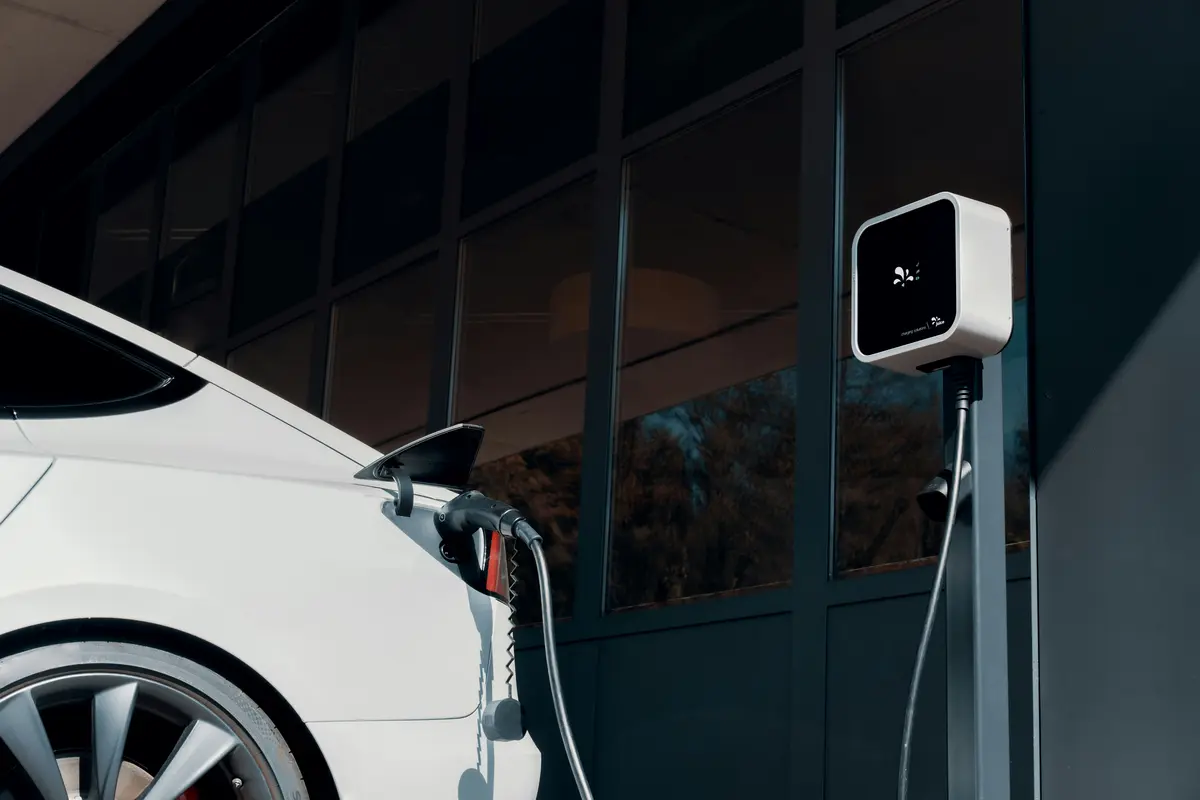
Photo: Yomex Owo
Your neighbor just bought a Tesla. Last week, another resident got a BYD. Now there's a proposal at the next AGM to install EV charging stations in the basement car park, and the estimated cost is $45,000.
Here's the question that's splitting apartment buildings across Australia: Should everyone's body corporate fees go up to subsidize charging for the 15% of residents who drive electric vehicles?
This isn't just theoretical hand-wringing. With EV sales jumping 120% in 2024, this debate is happening right now in strata AGMs from Cairns to Hobart. And it's getting heated.
Before adding new infrastructure costs to your already-high fees, you might want to check: What Are Body Corporate Fees? and Are My Fees Too High?
The Fairness Problem Nobody's Solving Well
Here's what makes this tricky: most people agree it's unfair for non-EV owners to pay someone else's "fuel" costs through common property electricity. That part's straightforward.
But then the arguments start. Body corporates across Australia report mediating between:
Non-EV owners saying:
- Why should I subsidize your luxury car charging?
- This will push up our quarterly fees when they're already $2,850/quarter
- Installation costs are your problem, not ours
- What about insurance premiums going up?
EV owners arguing back:
- We're reducing emissions and noise for everyone in the building
- EV chargers increase property values for all owners, not just us
- The government's literally pushing EV adoption, we're not being difficult
- Early adopters shouldn't be penalized for doing the right thing
Both sides have a point. But here's the thing: banning EVs isn't an option (and it'd be a PR disaster). The real question is finding a cost allocation model that doesn't leave half your owners fuming.
What Does EV Charging Actually Cost?
Before you can figure out who pays, you need to know what you're actually paying for.
Installation Costs (Per Charger)
For a standard Level 2 AC charger (which is what 90% of apartments end up with), you're looking at:
- Charger hardware: $1,500–$3,500
- Electrician to install it: $2,000–$8,000 (varies wildly depending on your car park layout)
- Switchboard upgrades if needed: $5,000–$15,000
- Individual meter: $800–$1,500
- Project management and approvals: $2,000–$5,000
Total per station: $6,000–$25,000. Most buildings we've looked at land around $11,500–$12,800.
Why such a massive range? It depends on:
- How far the cable run is from your main switchboard to the car park
- Whether your building's switchboard can handle the extra load (older buildings often can't)
- How many chargers you install at once (bulk discounts kick in around 4+ chargers)
- Whether contractors can easily access your car park or if it's a nightmare to get equipment in
- Building age, if you're in a 1980s building with original wiring, expect the higher end
Ongoing Costs
Electricity: A full charge for a Tesla Model 3 is roughly 50-58 kWh. At $0.30/kWh (Brisbane metro average), that's $15-$17.50 per charge. Most EV owners charge once a week, so you're looking at around $780/year per EV.
Maintenance: Chargers are pretty bulletproof for the first 3-5 years. After that, you might need to replace a unit every 7-10 years ($1,500-$3,000), and smart chargers sometimes have network fees ($5-$15/month).
Who Should Pay? Three Models That Actually Work
Australian body corporates are implementing three primary models. None of them are perfect, but they're all better than endless AGM arguments.
Model 1: You Want It, You Pay For It
This is the "don't overthink it" approach, and honestly, it's hard to argue with the fairness.
How it works: The EV owner covers everything, the hardware, the electrician, and a sub-meter so they're paying their actual electricity costs, not dumping it on common property. The body corporate just approves the work (via a bylaw), and the charger becomes part of the lot when it's sold.
Why this works: Non-EV owners don't subsidize anyone. Your quarterly fees stay exactly the same. There's no committee drama about "why are we funding luxury cars?"
The catch: You're looking at $6,000-$15,000 upfront if you're the EV owner. That's steep, especially if you're also dealing with high body corporate fees. And if three owners independently install chargers over two years, you might discover the building's switchboard can't handle a fourth without a $12,000 upgrade, which could've been avoided with coordinated planning.
This works best for smaller buildings (under 30 units) where only one or two owners currently have EVs.
If you go this route, here's a sample bylaw clause:
"Lot owner may install EV charging equipment at their sole cost, subject to: (a) Obtaining body corporate approval, (b) Installation by licensed electrician, (c) Individual sub-metering of electricity, (d) Owner maintaining insurance, (e) Removal and restoration upon lot sale (at owner's option)"
Model 2: Body Corporate Pays Upfront, Users Pay Electricity
This is the "thinking ahead" approach. The body corporate installs 4-6 shared chargers, funded by the sinking fund or a special levy. Users pay per kWh via an app or RFID card.
Why buildings choose this: Lower per-charger costs when you install in bulk. You optimize the electrical infrastructure instead of patching it together. And it genuinely does increase building amenity value, buyers notice when buildings have EV charging sorted.
The problem: Non-EV owners are subsidizing installation costs, even if they pay for usage. For a 60-unit building, you're talking $40,000-$85,000 upfront split across all owners. That's $665-$1,415 per owner for infrastructure they might never use.
This can work if:
- You're a large building (50+ units) with strong EV interest (15%+ of owners already have or plan to get EVs)
- Your sinking fund can absorb it without triggering a massive special levy
- You frame it as future-proofing property values
Some buildings soften the blow by charging booking fees or pricing electricity slightly above cost to recover capital.
Model 3: Body Corporate Does Infrastructure, Owners Do Chargers (Hybrid)
This is becoming the most popular approach because it splits the difference.
How it works: The body corporate installs electrical infrastructure to the car park, conduit runs, upgraded switchboard capacity, main distribution board. Individual EV owners then pay for their specific charger hardware and connection.
Why it's catching on: The body corporate spends $15,000-$25,000 on infrastructure that benefits everyone long-term. Individual owners pay $4,000-$6,000 for their charger instead of $10,000+. It's cheaper for everyone than doing it piecemeal.
The politics: You still need to convince non-EV owners to approve the infrastructure spend. But it's an easier sell than "pay for someone else's chargers." Frame it as future-proofing: by 2030, half of new car sales will be EVs. Buildings without charging will be at a disadvantage.
Cost split example:
- Body corporate pays: $20,000 (conduit, switchboard)
- Each EV owner pays: $4,200-$5,800 (charger, connection, meter)
This works well for medium buildings (20-50 units) expecting gradual EV uptake over 3-5 years.
State Rules: What You Can and Can't Do
EV charging rules vary surprisingly between states. Here's what matters in practice.
New South Wales
The short version: Owners have a right to install EV chargers under Section 108A of the Strata Schemes Management Act 2015. The body corporate can't unreasonably refuse.
You submit a request to the strata committee with quotes, electrical plans, and insurance. They've got 28 days to respond. If they refuse without good reason, you can go to NCAT (NSW Civil and Administrative Tribunal).
The owner pays all costs unless the majority agrees otherwise. Reasonable conditions apply, licensed electrician, insurance, proper metering.
Victoria
Key difference: You need a special resolution (75% vote) for chargers on common property. For minor installations affecting only your lot, an ordinary resolution might work.
The Owners Corporations Act 2006 says owners corporations can't unreasonably refuse sustainability upgrades. Victorian government's also pushing EV chargers in new developments, and some councils offer rebates.
User-pays electricity model is required.
Queensland
Under the Body Corporate and Community Management Act 1997, installation requires an ordinary resolution (50%+1 vote). You need to provide a detailed proposal including electrical certification. Body corporate can impose reasonable conditions, but installation costs are borne by the requesting owner (s).
South Australia
Requires special resolution (75% vote) for common property modifications. Owners can apply for exclusive use of a car park space with a charger. Must not affect other owners' rights, and electrical safety compliance is mandatory.
Western Australia, ACT, Tasmania, Northern Territory
Generally: ordinary resolution for minor installs, special resolution for significant common property changes. Owners bear costs unless otherwise agreed. ACT government provides rebates for body corporate EV chargers (up to $15,000 covering 50% of costs for 2+ chargers).
Metering: The Make-or-Break Detail
Here's what kills EV charging projects: someone skips proper metering, electricity costs get dumped on common property, and suddenly everyone's subsidizing three Teslas charging overnight.
Individual metering is non-negotiable. You've got three main options:
Option 1: Hardwired Meters ($800-$1,500 per charger) Direct connection to the electricity network, ±1% accuracy. The owner gets billed directly by their retailer or via the body corporate. Best for dedicated chargers in private car spaces.
Option 2: Smart Chargers with Built-in Metering ($2,000-$3,500) Chargers like Zappi, Tesla Wall Connector Gen 3, or ABB Terra AC have app control, usage tracking, and scheduled charging. Best for shared stations where you need to track who's using what.
Option 3: RFID/App-Based Systems ($3,000-$5,000 setup + $200/charger) Full user authentication, dynamic pricing, reservation systems. ChargeFox and Evie Networks offer body corporate packages. Best for buildings with 5+ shared chargers where you need proper access control.
Rule of thumb:
- 1-3 users? Hardwired meters.
- 4-10 users? Smart chargers.
- 10+ users? Full RFID platform.
How to Actually Get This Done
If You're an Individual Owner
Step 1: Get 2-3 quotes from licensed electricians. Ask for electrical plans showing cable runs and metering. Check with your strata manager whether the building's switchboard can handle it.
Step 2: Submit a formal request to your strata committee with all documentation. Propose the cost allocation (you pay 100%). Offer to increase your personal liability insurance.
Step 3: Wait for approval (NSW gives committees 28 days). They might request modifications or conditions. Once approved, get the bylaw registered.
Step 4: Book your licensed electrician. Notify the strata manager of installation dates. Get it done, get the inspection certificate, provide it to the body corporate.
Step 5: Connect the sub-meter and confirm billing arrangements.
Timeframe: 6-12 weeks from proposal to operational (assuming no dramas).
If Your Body Corporate Is Doing a Shared System
Step 1: Survey owners on current EV ownership and 5-year plans. You need to estimate demand to size the system properly.
Step 2: Get an electrical engineer to assess your building's capacity. They'll identify required upgrades and estimate costs for different scenarios (4 chargers? 8? 12?).
Step 3: Get 3+ quotes from EV charging specialists. Include hardware, installation, metering, and maintenance. Check warranty terms (usually 3-5 years).
Step 4: Present at AGM or EGM. In most states you'll need a special resolution (75%). If approved, fund it via the sinking fund or special levy.
Step 5: Appoint a project manager (often your strata manager), coordinate contractor access, complete installation (2-6 weeks depending on scope), and train users.
Timeframe: 4-8 months from initial survey to operational.
Common Objections (And How to Respond)
"Why should I pay for someone else's car?"
You shouldn't. That's why user-pays models exist. The EV owner covers 100% of installation and electricity via sub-metering. The body corporate just approves the work, it doesn't fund it.
"This will jack up our insurance premiums."
Probably not. We checked with three major strata insurers. Properly installed EV chargers by licensed electricians don't meaningfully increase premiums. Modern chargers have ground fault protection, thermal monitoring, and automatic shutoffs.
If you're worried, request a quote from your current insurer. Most buildings see either no increase or $0-$200/year building-wide.
"Our building's electrical system can't handle it."
True for some older buildings (especially pre-1990s high-rises). But most modern buildings (post-2000) have capacity for at least 4-8 chargers before you need upgrades.
And here's the thing: smart chargers can implement load management. They'll automatically charge during off-peak hours when the building's demand is lower. That avoids expensive network capacity upgrades.
If you do need a switchboard upgrade ($10,000-$25,000), that's a one-time cost that benefits all future EV owners.
"What if everyone wants one?"
They won't all want one immediately. Survey your building, you'll probably find 15-30% interest over the next 5 years, not 100%.
Install infrastructure for Phase 1 (say, 25% of spaces). Design it so you can expand later. Early adopters fund their own chargers; body corporate funds the shared infrastructure that makes future installs cheaper.
"Chargers will eat up visitor parking."
Don't put them in visitor parking. Install chargers in owners' designated car spaces. If you're doing shared chargers, designate specific bays. Use a booking/reservation system so people can't "camp" on chargers. If you offer visitor charging (rare), price it at premium rates.
Government Incentives & Rebates
Australian Capital Territory
The ACT Zero Emissions Vehicles Strategy offers rebates up to $15,000 for body corporate EV infrastructure. Covers 50% of installation costs, but you must install at least 2 chargers.
Victoria
Solar Victoria previously offered EV charger rebates, check current status. Focus was on buildings with solar panels.
Federal
No direct federal rebates for body corporate EV charging as of 2025. EVs themselves may qualify for FBT exemptions (which makes them more attractive to your owners, indirectly).
Rebates change frequently. Check your state's energy/environment department website.
Future-Proofing: Thinking 5-10 Years Out
By 2030, 50-60% of new car sales will be EVs (government target). By 2035, most apartment buildings will need some EV charging capacity or face a property value disadvantage.
Four smart strategies:
1. Install conduit now, chargers later Run electrical conduit to multiple car park spaces during your next major electrical work. Costs $5,000-$10,000 for conduit runs. Makes future charger installation 60% cheaper.
2. Oversize your switchboard When upgrading your switchboard for any reason, size it for 10-15 future EV chargers. Marginal cost now vs. full replacement later.
3. Use smart charging with load management Install smart chargers that talk to your building management system. They'll automatically delay charging during peak demand, preventing expensive network capacity upgrades.
4. Integrate with solar if you have it If your building has (or plans) rooftop solar, integrate EV charging. Charge during solar production hours = free energy. Battery storage can buffer demand spikes.
Sample AGM Motion
If you need to get this approved at your AGM:
Motion: That the Body Corporate consents to Lot Owner [Name], Lot [X], installing an electric vehicle charging station in car park space [Y] at the owner's sole expense, subject to:
(a) Installation by licensed electrician with Certificate of Electrical Safety
(b) Individual sub-metering of electricity consumption with costs borne by Lot Owner
(c) Owner maintaining appropriate insurance coverage
(d) Charger and associated equipment maintained by Lot Owner
(e) Owner indemnifying Body Corporate against claims arising from installation or use
(f) Registration of exclusive use bylaw for car park space [Y]
(g) Upon sale of Lot [X], new owner assumes responsibility OR owner removes equipment and restores space
The Bottom Line
EV charging doesn't have to divide your building or blow up your fees. The key is user-pays models with proper individual metering.
What works:
- Individual owners pay for their own chargers and electricity (Model 1)
- Or, body corporate funds basic infrastructure, owners fund their specific chargers (Model 3)
- Individual metering is mandatory, no dumping costs on common property
- State laws generally protect owners' rights to install (can't unreasonably refuse)
What doesn't work:
- Asking non-EV owners to subsidize someone else's charging without their consent
- Skipping metering and dumping electricity costs on common property
- Installing chargers without checking electrical capacity first
- Pretending EVs aren't coming and doing nothing
By 2030, you'll wish you'd planned ahead. Buildings without charging will struggle to attract buyers. The ones that sorted it out early (fairly and sensibly) will have a genuine amenity advantage.
Compare body corporate fees across Australia at BodyCorporateFees.com.
Ready to Contribute Your Fees?
Add your fees to help build the database. Get access to suburb overviews when they're ready.
Contribute Your Fees