

Average Body Corporate Fees in Brisbane (2026): What Owners Really Pay
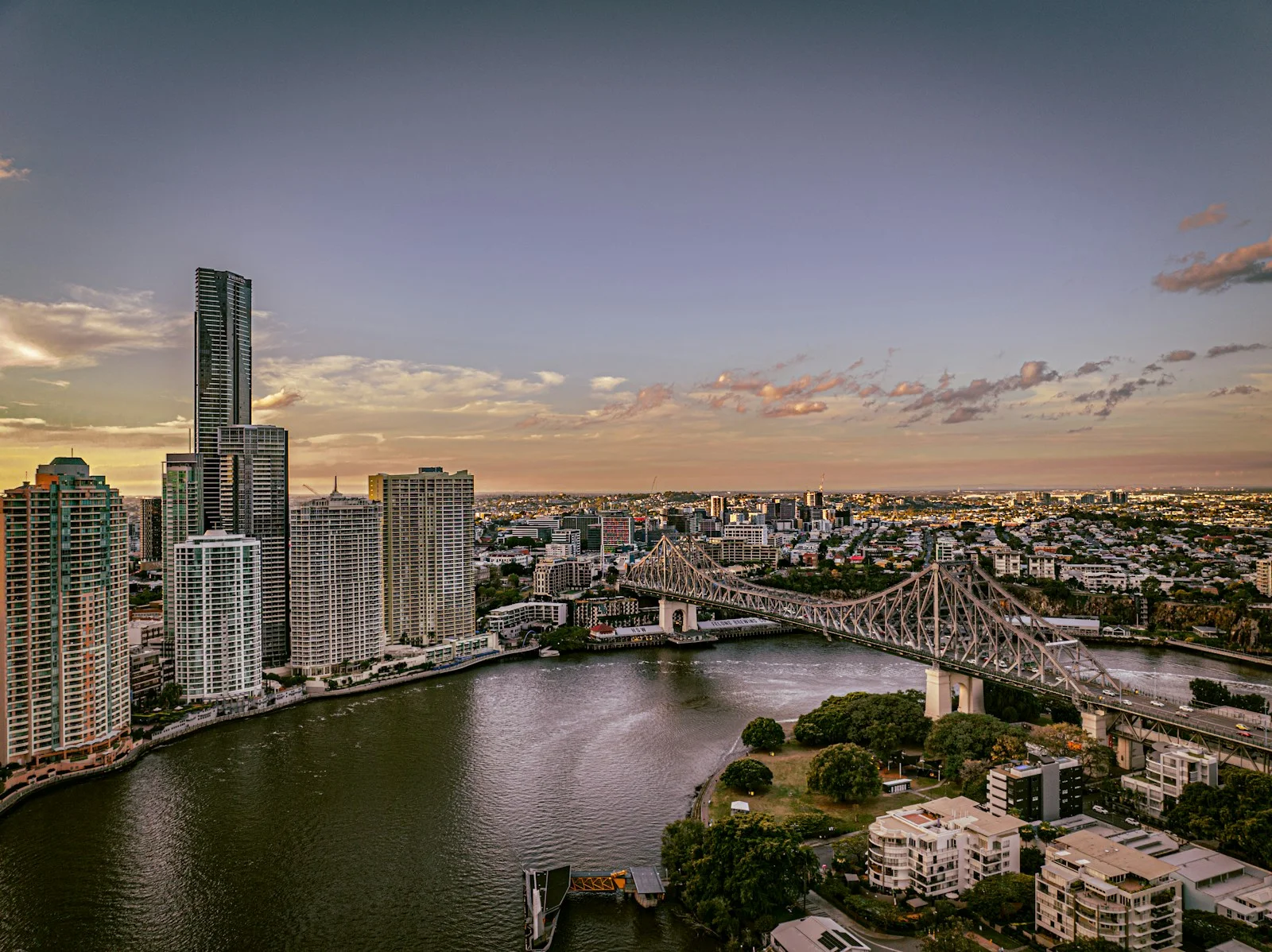
Photo: Josh Withers
If you own or are buying an apartment or townhouse in Brisbane, the body corporate levy is one of the biggest recurring costs you'll carry - and one of the hardest to sanity-check. Two units in the same suburb can have levies that differ by thousands of dollars a year, and the notice rarely explains why.
This guide pulls together what Brisbane owners typically pay in 2026 - the ranges by building type, the Queensland-specific factors that push fees up, and a clear way to work out whether your own fees are fair.
Related Guides
What Brisbane Owners Typically Pay
Brisbane's body corporate schemes range from small townhouse complexes in the outer suburbs to resort-style towers in the CBD, South Brisbane and along the river. The levy follows the building.
As a rough guide for a two-bedroom apartment:
Townhouse complexes $400–$900 per quarter. Common facilities are minimal, so you're mostly paying for insurance, gardens and shared driveways.
Small residential complexes (6–20 lots, no resort facilities) $600–$1,400 per quarter. Walk-up and low-rise blocks in suburbs like New Farm, Paddington or Toowong sit here, toward the lower end when there's no pool.
Mid-size buildings (20–60 lots, pool, some common facilities) $900–$2,000 per quarter. Buildings with an on-site caretaker add meaningfully to the cost.
High-rise and resort-style buildings (60+ lots, full facilities) $1,800–$4,500+ per quarter. Inner-Brisbane towers with concierge, gym, multiple pools and function rooms sit at the top of this range, and some exceed it.
In annual terms, that's roughly $1,600 a year for a simple townhouse complex up to $18,000+ for a premium tower apartment. The more lifts, pools, gyms and on-site staff a building has, the more there is to insure, clean, power and eventually replace - and the higher the levy.
See how your fees stack up
Have your levy notice handy? Add your fees anonymously in a couple of minutes - you'll see how they compare as other owners in your suburb contribute. No notice to hand? Estimate your levy with the free calculator.
Why We Don't Quote a Brisbane Median (Yet)
Most "average Brisbane body corporate fee" figures online are estimates - a formula applied to property values, or one national range stretched to fit. We'd rather publish a genuine median from real levy notices, suburb by suburb, the way we already do for East Perth and Zetland.
We only publish a suburb median once enough owners in that suburb have contributed for the number to be meaningful. No Brisbane suburb has reached that point yet. Until one does, the ranges above - drawn from the building types that dominate Brisbane's market - are the most honest guide we can give.
If you own in Brisbane, you can change that. Add your body corporate fees - it takes a couple of minutes, we never ask for documents, and your data is anonymised. Every contribution brings your suburb closer to a published median.
Know what your body corporate fees are?
Add them anonymously in 2 minutes - no documents stored. Every contribution helps build the benchmark for Australian apartment owners.
Contribute Your FeesWhy Brisbane Fees Vary So Much
Five things explain most of the difference between one Brisbane building and another:
- Amenities. Pools, gyms, lifts and concierge are the biggest swing factor. Every facility is an ongoing maintenance and insurance cost shared across the lots.
- Caretaking arrangements. Many Queensland schemes have a resident caretaker under a long-term caretaking and letting agreement. Caretaker fees can make up 15–30% of the administrative fund in some buildings - legal and common, but a big cost driver. The Queensland guide explains what to check before you buy into one.
- Insurance. Building insurance is mandatory and usually the largest single line in the budget. Brisbane and South East Queensland premiums have been repriced after flood and storm events, so if your levy jumped in the last few years, insurance is almost certainly part of why. See why premiums have doubled.
- Building age and condition. Newer buildings can carry high fees if they have extensive facilities or unresolved defects; older buildings may have low fees but an under-funded sinking fund, which sets up special levies later.
- The sinking fund. Queensland body corporates must keep a 10-year sinking fund forecast. A building that funds it properly will have a higher levy now but fewer nasty surprises. A suspiciously low levy often means the fund is being starved.
Queensland is the one state that uses "body corporate" as its legal term, under the Body Corporate and Community Management Act 1997. If you're buying or selling, it's also worth reading what changed in the August 2025 Queensland reforms, which expanded seller disclosure.
Is Your Brisbane Body Corporate Fee Too High?
A high fee isn't automatically a bad one - a well-run building that funds its sinking fund forecast should cost more than one quietly heading for a special levy. The real question is whether you're getting value, and whether your fee is in line with comparable Brisbane buildings.
Three quick checks:
- Compare like with like. A 150-lot riverside tower with pools and a caretaker isn't comparable to a 10-lot townhouse complex. Match building size and amenities before judging.
- Look at the split. How much of your levy goes to the administrative fund (day-to-day running) versus the sinking fund (future major works)? A sinking fund well short of its 10-year forecast is a warning sign, not a saving.
- Check the big lines. Insurance, the caretaker contract and management fees are the usual culprits. The budget - and therefore your levy - is approved at the AGM, so that's the place to question it, and you're entitled to inspect the body corporate's records.
Our guide to whether your fees are too high walks through this in more detail, and the body corporate fees calculator shows how your levy is worked out from the budget and your lot entitlement.
Are the fees reasonable for the price?
Weighing up a unit? Compare its body corporate fees to the property's value and rent, and see whether they sit within the typical 0.5-1% of value a year.
Open the Affordability CalculatorFrequently Asked Questions
What are the average body corporate fees in Brisbane?
Most Brisbane owners pay between $400 and $4,500+ per quarter, depending on building type and amenities. Townhouse complexes sit at the lower end; inner-city towers with pools, concierge and on-site caretakers sit at the top.
Why are Brisbane body corporate fees so high?
The biggest drivers are shared amenities (pools, gyms, lifts), caretaker contracts, and building insurance, which has been repriced across South East Queensland after flood and storm events. A higher levy can also reflect a building that properly funds its sinking fund.
Are body corporate fees higher in Brisbane or Sydney?
Brisbane's ranges run a little lower than Sydney's at the top end, but they overlap heavily. The building you're in matters far more than which city it's in. See our guide to average strata fees in Sydney for comparison.
Do Brisbane townhouses pay body corporate fees?
Yes, if the townhouse is part of a community titles scheme. Fees are usually lower than for apartments - around $400–$900 per quarter - because there's little shared infrastructure beyond insurance, gardens and driveways.
Ready to Contribute Your Fees?
Add your fees to help build the database. Get access to suburb overviews when they're ready.
Contribute Your Fees