

Average Body Corporate Fees on the Gold Coast (2026): What Owners Really Pay
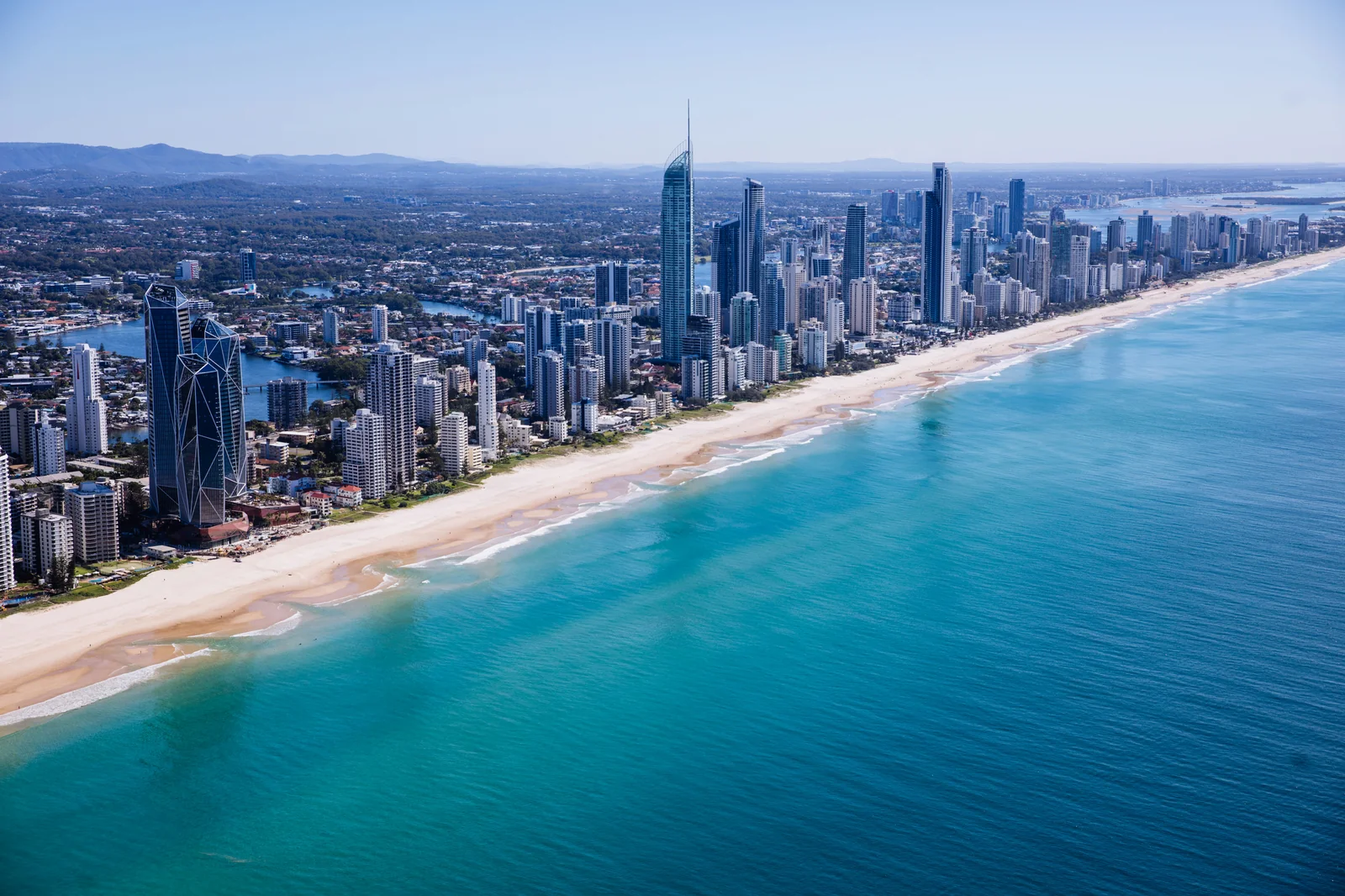
Photo: City of Gold Coast
The Gold Coast has one of the highest concentrations of high-rise apartments in Australia, and almost every one of them sits in a body corporate. If you own or are buying there, the levy is one of the biggest recurring costs you'll carry - and on the Gold Coast it varies more than almost anywhere else, because the building stock ranges from quiet townhouse complexes in the hinterland suburbs to 50-storey beachfront towers run partly as holiday accommodation.
This guide pulls together what Gold Coast owners typically pay in 2026 - the ranges by building type, the factors that push coastal fees up, and a clear way to work out whether your own fees are fair.
Related Guides
What Gold Coast Owners Typically Pay
The levy follows the building, and Gold Coast buildings sit at both extremes. As a rough guide for a two-bedroom apartment:
Townhouse complexes $400–$900 per quarter. Suburbs like Robina, Varsity Lakes, Coomera and Pimpama have large numbers of townhouse schemes where you're mostly paying for insurance, gardens and shared driveways.
Small residential complexes (6–20 lots, no resort facilities) $600–$1,400 per quarter. Older walk-up blocks a street or two back from the beach in Southport, Labrador, Palm Beach or Coolangatta often sit here, toward the lower end when there's no pool or lift.
Mid-size buildings (20–60 lots, pool, some common facilities) $900–$2,000 per quarter. Most mid-rise buildings with a pool and an on-site caretaker fall in this band.
High-rise and resort-style towers (60+ lots, full facilities) $1,800–$4,500+ per quarter. Beachfront and broadwater towers in Surfers Paradise, Broadbeach and Main Beach - with multiple pools, gyms, spas, concierge or a holiday-letting reception - sit at the top of this range, and prestige buildings can exceed it significantly.
In annual terms, that's roughly $1,600 a year for a simple townhouse complex up to $18,000+ for a premium beachfront apartment.
See how your fees stack up
Have your levy notice handy? Add your fees anonymously in a couple of minutes - you'll see how they compare as other owners in your suburb contribute. No notice to hand? Estimate your levy with the free calculator.
Why We Don't Quote a Gold Coast Median (Yet)
Most "average Gold Coast body corporate fee" figures online are estimates - a formula applied to property values, or one national range stretched to fit. We'd rather publish a genuine median from real levy notices, suburb by suburb, the way we already do for East Perth and Zetland.
We only publish a suburb median once enough owners in that suburb have contributed for the number to be meaningful. No Gold Coast suburb has reached that point yet. Until one does, the ranges above are the most honest guide we can give.
If you own on the Gold Coast, you can change that. Add your body corporate fees - it takes a couple of minutes, we never ask for documents, and your data is anonymised. Every contribution brings your suburb closer to a published median.
Know what your body corporate fees are?
Add them anonymously in 2 minutes - no documents stored. Every contribution helps build the benchmark for Australian apartment owners.
Contribute Your FeesWhy Gold Coast Fees Vary So Much
Five things explain most of the difference between one Gold Coast building and another:
- Amenities. Resort-style towers carry pools, spas, gyms, saunas, tennis courts and function rooms. Every facility is an ongoing maintenance, power and insurance cost shared across the lots - and in an older tower, eventually a replacement cost too.
- Caretaking and letting. Many Gold Coast buildings have a resident manager under a long-term caretaking and letting agreement - the arrangement often sold as "management rights". These contracts commonly run 10 to 25 years, and the caretaking fee can make up 15–30% of the administrative fund in some buildings. The Queensland guide explains what to check before you buy into one.
- Holiday letting. Buildings run substantially as short-term accommodation see more wear on lifts, corridors, pools and furniture than purely residential ones, and some operate under the Accommodation Module rather than the Standard Module. If you're buying to live in, check how much of the building is let to holiday-makers and how the costs of that activity are shared.
- Coastal exposure. Salt air is hard on buildings. Balcony balustrades, window frames, concrete facades and rooftop plant corrode faster on the beachfront, so maintenance runs higher and the sinking fund has more to plan for. Older towers with concrete spalling ("concrete cancer") are a common source of special levies.
- Insurance. Building insurance is mandatory and usually the largest single line in the budget. South East Queensland premiums have been repriced after flood and storm events, and high-rise coastal towers are expensive to insure. See why premiums have doubled.
Queensland body corporates must also keep a 10-year sinking fund forecast. A building that funds it properly will have a higher levy now but fewer nasty surprises - a suspiciously low levy in an ageing beachfront tower is more often a warning sign than a bargain. If you're buying or selling, read what changed in the August 2025 Queensland reforms, which expanded seller disclosure.
Is Your Gold Coast Body Corporate Fee Too High?
A high fee isn't automatically a bad one. The real question is whether you're getting value, and whether your fee is in line with comparable Gold Coast buildings.
Three quick checks:
- Compare like with like. A 200-lot Surfers Paradise tower with a holiday-letting reception isn't comparable to a 12-lot Palm Beach walk-up. Match building size, age and amenities before judging.
- Look at the split. How much of your levy goes to the administrative fund versus the sinking fund? For an older coastal building, a sinking fund well short of its 10-year forecast is the biggest red flag on the budget.
- Check the big lines. Insurance, the caretaking contract and management fees are the usual culprits. The budget is approved at the AGM, so that's the place to question it, and you're entitled to inspect the body corporate's records.
Our guide to whether your fees are too high walks through this in more detail, and the body corporate fees calculator shows how your levy is worked out from the budget and your lot entitlement.
Are the fees reasonable for the price?
Weighing up a unit? Compare its body corporate fees to the property's value and rent, and see whether they sit within the typical 0.5-1% of value a year.
Open the Affordability CalculatorFrequently Asked Questions
What are the average body corporate fees on the Gold Coast?
Most Gold Coast owners pay between $400 and $4,500+ per quarter, depending on building type and amenities. Townhouse complexes sit at the lower end; beachfront towers with resort facilities and on-site management sit at the top, and prestige buildings can exceed it.
Why are Gold Coast body corporate fees so high?
The biggest drivers are resort-style amenities, caretaking and letting contracts, building insurance, and the extra maintenance that salt air demands on beachfront buildings. Buildings with a lot of holiday letting also see heavier wear on common property.
Are body corporate fees higher on the Gold Coast or in Brisbane?
The ranges are similar and overlap heavily, but the Gold Coast has a larger share of high-rise resort-style towers, which pushes more owners toward the top of the range. See our guide to average body corporate fees in Brisbane for comparison.
Do Gold Coast townhouses pay body corporate fees?
Yes, if the townhouse is part of a community titles scheme. Fees are usually lower than for apartments - around $400–$900 per quarter - because there's little shared infrastructure beyond insurance, gardens and driveways.
Ready to Contribute Your Fees?
Add your fees to help build the database. Get access to suburb overviews when they're ready.
Contribute Your Fees